
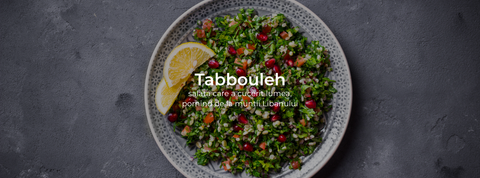
Tabbouleh (or tabouli) has its roots in the mountains of Lebanon and Syria, where families used simple, abundant ingredients: fresh parsley, tomatoes, green onions, bulgur, and a lemon and olive oil dressing. The name comes from the Arabic "tabil," meaning "to season," and the recipe appeared long before modern borders divided the Levant into separate states.
What differentiates authentic Lebanese tabbouleh from Western variants is the proportion of ingredients: in Lebanon, the salad is mainly parsley, with only a small amount of bulgur sprinkled among the leaves, unlike versions in other countries where bulgur becomes the main ingredient, and parsley plays only a secondary role.
In Syria, the recipe remains very close to the Lebanese one, sometimes with the addition of pomegranate or fresh mint for a sweeter-sour note. In Turkey, where Levantine influences have blended with Anatolian cuisine, "kısır" appears, a close relative of tabbouleh, but with fine bulgur, pepper paste, and pomegranate juice, much spicier and less dependent on parsley. In Palestine, tabbouleh has become part of the daily mezze meal, often served alongside hummus and warm pita bread.
Regardless of the chosen variant, tabbouleh remains a symbol of Mediterranean freshness – a light, aromatic salad that is perfect for summer, as well as family meals throughout the year. A dash of sumac or a drop of pomegranate molasses can completely transform the taste, bringing authenticity directly from the markets of Damascus or Beirut.

Comments (0)
There are no comments for this article. Be the first one to leave a message!